Thursday, November 7, 2019

MAKE A DIFFERENCE IN THE PRESIDENTIAL ELECTION!


Most of the time I focus on local issues, but sometimes it’s important to think about how we can affect the national dialogue on disability!  So focus your attention on this:  On January 13, 2020,  AAPD - the American Association of Persons with Disabilities – will host a nonpartisan Presidential Forum on Disability Issues in Austin, Texas.  If any of you think you can attend, or know someone who might be able to, tickets are $10 apiece and can be ordered here:  https://www.eventbrite.com/e/elected-for-inclusion-a-presidential-forum-on-disability-issues-tickets-77923046931.  As part of its REV UP Campaign (https://www.aapd.com/advocacy/voting/), and with the cooperation of the National Council on Independent Living (https://www.ncil.org/), AAPD has submitted important questions to declared presidential candidates in advance of the Forum, and the responses from candidates so far can be found here:  https://www.aapd.com/advocacy/voting/presidential-elections-2020/.

And in the meantime, for those of you with deep pockets, USICD – the U.S. International Council on Disabilities – will host its annual gala right here in our fair city on December 3 (http://usicd.org/news/events/).  Among other honorees will be (posthumously) NCIL founder and prominent disability advocate Marca Bristo (http://www.advocacymonitor.com/ncil-mourns-the-loss-of-marca-bristo/).  The Presidential Forum will be on everyone’s lips, so pay up and attend if you’re able.  It’s always a wonderful and uplifting event.

WE CAN – AND DO – MAKE A DIFFERENCE!  SHOW UP, WHEN AND WHERE YOU CAN – AND, DEFINITELY,    VOTE!

Tuesday, October 22, 2019

UPDATE ON DISABILITY ADVOCACY IN D.C.


I wrote recently (https://www.ddinwdc.com/2019/10/put-november-21-onto-your-calendar.html) about various advocacy meetings taking place this month with respect to the Department on Disability Services (DDS), as well as a broader visioning effort that the Developmental Disabilities Council (DDC) will be organizing later in the year.

Project ACTION! was rightly in the forefront of the meeting on October 10 concerning follow-up on cancellation of the Georgetown contract and ensuring advocacy groups are not blindsided about future such decisions.  While I had characterized this as a meeting to plan a protest, in fact the meeting (at which I was not present) covered many other options, and there will be other upcoming discussions to narrow and prioritize the choices. 

In response to criticisms leveled at DDS over recent months about inadequate consultation and communication, last Friday DDS director Andy Reese convened a meeting of the heads of several organizations including Project Action!, the Georgetown University Center, ULS/Disability Rights DC, Quality Trust, the State Rehabilitation Council and the DDC.  This was a wide-ranging discussion, touching on such issues as why the many meetings DDS now holds are not leading to productive two-way communication, what specific challenges DDS is facing with respect to the structure and cost of the current home and community-based (HCBS) waiver, and how to begin structuring better consultation mechanisms.  DDS is doing some internal work on these issues after which Andy says he’ll be following up on this session.

The two meetings described above represent efforts toward reaching across the current divide that became so apparent over the summer.  However, in my last blog post I also mentioned DD Council plans to convene the first of a more far-reaching series of visioning meetings – focused on getting a better picture of the entire D.C. disability community in all its diversity and reimagining what true community integration should look like.  At the DD Council public meeting on NOVEMBER 21 – KEEP THAT DATE ON YOUR CALENDAR – you’ll hear something about our plans for this series of meetings, but for now we’ve decided we need slightly more time for planning -  so the first visioning meeting will not take place that day.  While planning continues, and with a view toward starting to reach beyond the usual participants, you could be helpful by sending Alison Whyte, the DDC executive director, contact information for any local cultural and linguistic groups that may not normally get represented in our disability meetings, so that we can build the best contact list possible:  that email is alison.whyte@dc.gov.  (The DD Council is a federally-funded and federally-mandated board that is housed in the D.C. Office of Disability Rights but is not part of the D.C. government:  see more information by going to “Acronyms and Organizations You Should Know” under Pages, to the right of this post, or here: https://www.ddinwdc.com/p/blog-page.html.)

And now a word about the DSP salary legislation, B23-214, that received a hearing in the D.C. council’s human services committee in June:  https://www.ddinwdc.com/2019/06/a-fair-deal-for-direct-support.html.  If you’ve been alert you will have noticed articles on this topic in the Northwest Courier (https://nwc.news/) and Street Sense (https://www.streetsensemedia.org/) lately.  My understanding is that this bill will be progressing through the D.C. council in the coming weeks, so weigh in with your council members – see https://www.ddinwdc.com/p/members-of-d.html or click on the “Contacting the D.C. Council” page over to the right to get contact information.  And incidentally, if you get a chance to see the film “Invaluable” about the role of direct support professionals (DSPs), as I did with other friends at the Arc national convention last Saturday (https://www.ddinwdc.com/2019/10/film-saluting-direct-support.html), make sure you grab the opportunity next time!

Friday, October 11, 2019

PUT NOVEMBER 21 ONTO YOUR CALENDAR


As the Georgetown contract issue was building, in early July I wrote a post called, “Andy, You Need a Plan” (https://www.ddinwdc.com/2019/07/andy-you-need-plan.html), followed by another, “Dialogue and Advocacy” (https://www.ddinwdc.com/2019/07/dialogue-and-advocacy.html), about the roles of the D.C. government and the advocacy community in building a better future.  I hope you’ll go back and re-read those as background to what I write here.

Although the Georgetown contract expired five weeks ago, the interactions between DDS and the advocacy community continue to reverberate, with, on the one hand, some groups meeting yesterday to plan a protest, and on the other, Andy Reese having reached out to the heads of key advocacy groups (myself included, as DD Council chair) for a confab late next week.

However, the past few months have demonstrated a need for a much broader dialogue, originating not with DDS but within the advocacy community, about the direction in which we need to move to ensure a more inclusive future in our city.  THE DEVELOPMENTAL DISABILITIES COUNCIL PLANS TO KICK OF THIS IMPORTANT DIALOGUE ON NOVEMBER 21, in conjunction with the Council’s regular meeting scheduled for that day.  PLEASE PUT THIS DATE ONTO YOUR CALENDAR AND SPREAD THE WORD FAR AND WIDE – there will be more information to come here in my blog and on the DD Council’s website:  https://ddc.dc.gov/ with respect to time, venue, agenda and so forth. 

This will not be a one-shot deal.  We foresee a visioning exercise that will hopefully attract more attention and ensure outreach to all ages and to cultural communities that have not yet been reached effectively in efforts up to now.  The hallmark of this effort is to make it community-driven: by people and their families who live in D.C. and have a true stake in the outcomes.  Please do what you can to spread the word, and plan to participate yourself as you’re able.

FILM SALUTING DIRECT SUPPORT PROFESSIONALS: TOMORROW NIGHT!


Repeating my message about tomorrow night’s FREE film saluting DSPs:

I’ve written a lot recently about direct support professionals, and among other things I mentioned a film called “Invaluable,” created at the University of Minnesota, which I saw this summer at the NACDD conference of councils on developmental disabilities in New Orleans .  I’m thrilled to say that there is going to be a free local screening of this movie by the national Arc on October 12, 4-6:30 P.M., and you can RSVP to attend it here:  https://tinyurl.com/y5qr73dk.  It will be happening at the Grand Hyatt Hotel, 1000 H St NW, where the Arc’s national conference is also taking place – but you don’t need to register for the conference in order to attend the film (and free reception), so sign up today for this very timely show!

And stay tuned to my blog for another post on important new local developments!

Saturday, September 21, 2019

Keep Celebrating Direct Support Professionals!


Before getting to my main message, I want to let you know that anyone who was unable to attend the D.C. statehood hearing live can view it here:  https://www.youtube.com/watch?v=ZKpD8Fyo2R8.  The hearing was amazing, and a historic moment in the movement toward recognition of the full rights of D.C. citizens with and without disabilities.  The turnout was tremendous – two overflow rooms and also hundreds in Spirit of Justice Park.  Unforgettable.

I’ve written a lot recently about direct support professionals, and among other things I mentioned a film called “Invaluable,” created at the University of Minnesota, which I saw this summer at the NACDD conference of councils on developmental disabilities in New Orleans .  I’m thrilled to say that there is going to be a free local screening of this movie by the national Arc on October 12, 4-6:30 P.M., and you can RSVP to attend it here:  https://tinyurl.com/y5qr73dk.  It will be happening at the Grand Hyatt Hotel, 1000 H St NW, where the Arc’s national conference is also taking place – but you don’t need to register for the conference in order to attend the film (and free reception), so sign up today for this very timely show!

Wednesday, September 18, 2019

#ShowUp4DC

Wondering where to meet up tomorrow for the D.C. statehood hearing in the U.S. House of Representatives?  You've found it!


Be there at 9:15 to stand with your D.C. Developmental Disabilities Council (https://ddc.dc.gov/) in favor of D.C. statehood!

Tuesday, September 10, 2019

D.C. STATEHOOD HEARING SEPTEMBER 19: BE THERE!


I’ve written in earlier posts about the hearing on September 19 (next week!) in the U.S. House of Representatives on Representative Norton’s D.C. statehood bill.  The hearing will start at 10:00 in the Rayburn House Office Building, and more information can be found here: https://www.showup4dc.com/.  .

It’s so important for as many D.C. residents and other supporters of D.C. citizens’ rights to show up and demonstrate that people care about democracy for the District!  And having a good crowd of local disability advocates would be an especially strong statement that REAL PEOPLE live in D.C. and WE DESERVE OUR RIGHTS!

The accessible entrance for the Rayburn Building is at the horseshoe drive on South Capitol St. SW.  Join me there by 9:15 on the morning of Thursday, September 19 so we can make a visible difference in support of D.C. statehood!  Show Up for D.C. and bring your friends!   https://www.showup4dc.com/

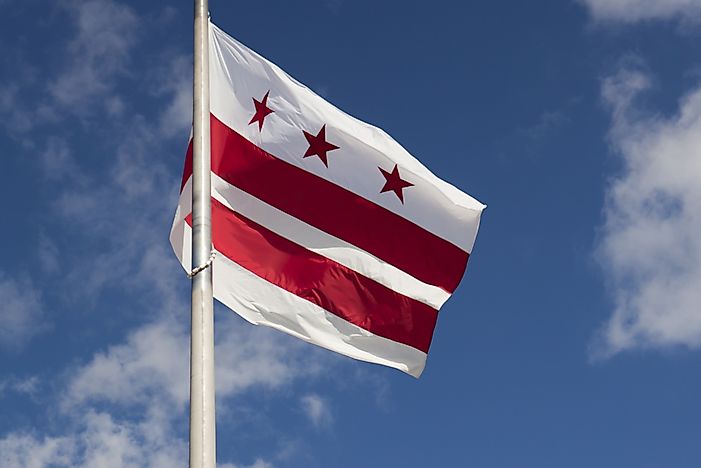
Image result for D.C. FLAG

Tuesday, August 27, 2019

Direct Support Professionals in the Limelight


Many of you are out of town right now, but those who are not may have heard or read one of these news items concerning the DSP Academy, hosted by RCM of Washington (https://rcmofwashington.com/) and funded by DDS (https://dds.dc.gov/):


This is an exciting new initiative that has potential both to expand the local pool of direct support professionals (DSPs) and to offer more employment options to people with disabilities.  It’s a great program that hopefully will expand in future. 

Also noteworthy in this regard is UDC’s addition of a DSP career pathway to their workforce curriculum:

These are welcome new developments on the DSP front locally, although the shortage of DSPs here and around the country continues to be acute.  When I attended the meeting of the National Association of Councils on Developmental Disabilities (NACDD) in July, we viewed an important film called “Invaluable” addressing the essential and demanding role played by DSPs nationwide – you’ll find a short clip from this film here:  http://www.supportedliving.com/page-1646896, but I hope we can arrange for a local viewing of the entire film before long.

You’ll recall that there was a hearing in the D.C. Council back in June to discuss pending legislation concerning compensation for DSPs in D.C.  I discussed that hearing in this blog post:  https://www.ddinwdc.com/2019/06/a-fair-deal-for-direct-support.html.  I haven’t heard much about the legislation since that time, but I hope that will change when the council (https://dccouncil.us/) returns from its recess in mid-September.

Saturday, August 17, 2019

The Health Initiative has Opened the Door


In the wake of last week’s offer by Deputy Mayor Turnage’s office to extend the Georgetown contract only if advocates could identify specific gaps in the DDS transition plan (https://dds.dc.gov/sites/default/files/dc/sites/dds/page_content/attachments/DDSGeorgetownUCEDDPlan-71919.pdf), there have been follow-up approaches to the administration, but these met only with the response that Turnage has responsibility for this matter and has  already given the Bowser administration’s position. 

This episode has galvanized the advocacy community and is giving rise to a lot of discussion about next steps.  There is widespread recognition that the failure in this case to engage and consult with stakeholders long before the deed was done was no exception, and that it’s essential to ramp up the voice of the disability community in developing the vision and strategy for D.C. disability supports in the coming years.  At the same time, it also is absolutely necessary to broaden our representation to segments of the community that have not normally been heard – and our allies – in order to grow our base.

There are varying views at this point about the ability still to effect change with respect to the Georgetown contract.  For my part, I believe a solid analysis of the transition plan – even though we all agree it came far too late – might still have a chance of identifying critical reasons for an emergency extension, and I doubt that any other action before the end of August will have much effect. 

There is a more fundamental issue here, however, that is about not being taken for granted in future and about being viewed from here on as an integral part of a diverse D.C. population.  There is a lot we can do on this front.  To that end, please pay close attention to the DD Council’s website - https://ddc.dc.gov/ - in the coming days for further news about gathering and organizing stakeholders.  For starters, if you haven't done it already, I encourage everyone reading this to put onto their calendars the September 19 hearing on D.C. statehood (10:00 at the House Rayburn Office Building) – see https://www.showup4dc.com/.   

Showing up reliably and insisting on being recognized and valued citizens of the District of Columbia is going to be our best insurance against future episodes of this kind. 

More to come on all of this -

Friday, August 9, 2019

Is There More to Say to DDS about the Health Initiative?


At the D.C. Developmental Disabilities Council meeting yesterday, a representative from Deputy Mayor Turnage’s office repeated an offer already made to, and rejected by, advocacy groups in a meeting with the deputy mayor on Monday – namely, that the D.C. government is willing to schedule weekly listening sessions between DDS director Reese and advocates between now and the end of August to hear about any specific shortcomings in the proposed transition plan (https://dds.dc.gov/sites/default/files/dc/sites/dds/page_content/attachments/DDSGeorgetownUCEDDPlan-71919.pdf) . However, there is no offer to extend the Georgetown contract beyond its August 31 end date unless advocates can demonstrate that an emergency extension is needed in order to address clear gaps in the transition plan – a very tall order given limited time and the interconnectedness of the services Georgetown has provided.

There was also a whiff of this offer in Andy Reese’s closing remarks Wednesday on the Kojo Nnamdi show (https://thekojonnamdishow.org/shows/2019-08-07/upcoming-changes-in-d-c-disability-services-spark-public-pushback).   However, this “clean up” effort is not what anyone in the advocacy community had in mind in remarks at the July 23 roundtable hosted by Brianne Nadeau (http://dc.granicus.com/MediaPlayer.php?view_id=2&clip_id=5144).  In the DD Council statement I delivered (as DD Council chair) at the roundtable, we pointed out that “the transition plan just issued by DDS [on July 19] was made public far too late for adequate discussion to take place on the representations it makes about plans to ensure Health Initiative services are appropriately sustained.  A transition plan for such an essential set of services needs to be created in partnership with people receiving services and other stakeholders, and this unfortunately has not been the case.”  Now the DC government is offering three weeks.

At the same roundtable, Quality Trust’s Phyllis Holton testified, “The best transition plan would be one that was informed by community engagement – and integrates the perspective and experiences of impacted stakeholders, including service providers, people with disabilities, family members, and advocates.”  Nothing – not even a limited extension, much less the year or more advocated by some – is being offered in order to allow for this sort of input and dialogue.  While the deputy mayor’s office yesterday acknowledged it “fumbled” in this case, no remedy is being offered beyond listening sessions as the clock ticks down to the contract’s expiration.

Over a month ago, the DD Council offered to facilitate a conversation between DDS and the advocacy community, and that offer was renewed in my statement on July 23.  DDS has shown no interest in this approach, instead allowing the clock to keep ticking.  So here we are.  Tell me what you think: 

·       Should the advocacy community refuse to engage in further discussions, in the face of a near-term deadline and little prospect of any give in the government’s perspective; or
·       Is it worthwhile to talk further with Andy (at a time and place of the community’s, not DDS’, choosing) as the summer, and the contract, wind down, in hopes of convincing him to make limited last-minute adjustments?

Time to make yourselves heard.